News Archive
Field Day 2016 MF/LF/VLF message / beacon demonstration opportunity
May 29, 2016 – Posted in: 630 Meter General Topics, 630 MetersStations participating in the Field Day 2016 demonstration opportunity follow (Updated May 29, 2016):
| Callsign | State | kHz | Mode | ERP | Amateur Call sign |
| WG2XIQ | TX | 474.5 | CW | 5-7W | KB5NJD |
| WH2XHA | PA | 476.6 | QRSS3 | 1W | K3DZ |
| WG2XSV | WA | 475.5 | CW | 1W | W0YSE/7 |
630 Meter stations operating during Field Day 2016 are listed HERE.
Stations who operated during Field Day 2015 are listed HERE.
For more information about this event, please go to:http://njdtechnologies.net/field-day-2016-mflfvlf-messagebeacon-demonstration-opportunity/
- QST - SPECIAL
ANNOUNCEMENT - QST
-
In Honor of Fessenden and
Heising
Brian Justin, WA1ZMS/4
W F 9 X I H
The early history of wireless
contains the names of many great pioneers. While Marconi’s name is most
well known, the names of Fessenden and Heising are only rarely mentioned. As
early as 1900 Reginald Fessenden was experimenting with the direct transmission
of human speech. While during WW1, Raymond Heising was developing a method of
constant-current modulation that was one of the earliest forms of AM. Since I
have been one of the active CW 600m stations as part of the ARRL’s
Experimental License project for some time now, I decided to take a step or two
further into the realm of early radio transmissions. One of the transmitters I
have used for 600m CW and QRSS work has been a vintage homebrew design that
could support traditional CW and Heising AM. Since the ARRL’s Part 5
license only supports CW and narrow-band digital modes, the Heising modulator
went unused until a new idea came to mind.
Fessenden’s early work
includes a very unique 1906 Christmas Eve transmission of him playing the
violin, a recording of a “Ombra mai fu”, and him reading a Bible
verse. An idea was thus born to apply for an FCC STA (Special Temporary
Authorization) for 600m operation that is for amplitude modulation, in
particular the Heising modulation. With the cooperation of commercial coastal
CW station WNE and the FCC’s OET (Office of Engineering Technology) the
STA with call sign WF9XIH was granted for AM transmissions until March 1st,
2012 with a center carrier frequency of 472.5kHz. The plan is to begin a series
of evening test transmissions the week of December 18th, 2011 with a special
recreation of Fessenden’s Christmas Eve transmission at 0200z on Dec 25th.
(That would be 9pm EST Dec 24th, 2011).
Since the likelihood of a 5w AM
signal being heard much beyond a few 10’s of miles, a 500W solid state
linear PA will be used for best DX. WF9XIH is licensed for up to 20wERP (just
like the WD2XSH stations) and every effort will be made to run as close to that
ERP as possible. The same antenna (a 160m dipole feed as a Marconi-T against
ground) that has been used for WD2XSH/31 will be used for WF9XIH.
Commercial station WNE is currently running CW marine weather
transmissions at 2200z & 0100z daily. So you can sharpen your 25WPM CW
skills at those times too. WF9XIH transmissions are being coordinated with WNE
and any changes to the WNE schedule will alter the WF9XIH operating times. The
current plan is to at least make a Heising AM transmission most evenings at
0200z. Audio loops of speech and a series of stepped audio tones will be used
most of the time. The stepped audio tones will make it easier for DX listeners
to demodulate in CW or SSB mode even when they are well beyond the range of the
AM signal.
General information about WD2XSH/31 can be found at:
http://w4dex.com/500khz/wd2xsh31.htm
If you copy any of the transmissions, please be sure to log them at
www.500kc.com
Extra effort will be made to try and be QRV in the
evenings the week before and after the Christmas weekend.
73, Brian
Justin, WA1ZMS/4 & WD2XSH/31 & WF9XIH
(Editor's note: Due to illness, I was late in posting this
information.)
For photos of Brian's WF9XIH
setup, please see this
page.
New Files
Available for Download:
M11-5.pdf - The Band Plan for
the 461 - 475 KHz band for WD2XSH and other stations.
.
M11-6.pdf - The September
Status Report for the WD2XSH Stations covering June 1 through August 31,
2010.
.
RN11-1.pdf - Summary Report of
the Ground Wave Tests run during the Summer of 2010.
.
RN11-16.pdf - Summary Report
of the Ground Wave Tests run during the Winter of 2010 through the Spring of
2011.
- - - - -
Juan Granados, K4LCD, has been granted FCC Experimental
License WF2XXQ to operate on 130 KHz and 500 KHz.
His web site for 600 Meters is at:
https://sites.google.com/site/k4lcdars/home/my-600m-experimental-proyect
Congratulations, Juan!
Australia Now on 600 Meters
!
---
VK2XV is now authorised to operate in the band 505 kHz to
515 kHz until October 2012.
Currently he is the only Amateur licencee
allowed to operate in all of Australia.
Experimental Call: AX2NMR
Ham
Call: VK2XV
Band (kHz): 505-515
ERP (watts): 0.1 (allowed up to
25W)
Location: North Richmond, NSW, Australia
Grid Square: QF56ik
Ops
Name: Steve Olney
Website/Email:
vk2xv-500khz.blogspot.com
A number of the WD2XSH 500-kHz stations will be on the air on Thursday night, November 3 to mark the 105th anniversary of the Berlin treaty that made 500 kHz the International Distress Frequency. Stations operating in the band from 495 to 510 kHz will call CQ on 500 kHz and then QSY to complete the QSO. Stations operating in the band from 461 to 478 kHz will call CQ on 474.5 kHz and then QSY. Other stations may operate beacons with special messages in the bands from 508 - 510 kHz and 476 - 478 kHz. Reports are welcome via the www.500kc.com web site and most stations will QSL. (tnx W1FR)
NOTE - The official operating time schedule is for WD2XSH stations to operations starting at about their local sunset time on Wednesday, November 3. This will vary by time zone. Most stations will likely operate until at least their local midnight or possibly later. Be aware that some stations may begin general operation or bulletin or beacon transmissions as early as 0000 UTC on November 3.
May I suggest that if you are not directly involved as a licensed operator in the ARRL 600 Meter project, but just wish to listen in on November 3, you should download the two frequency authorization lists for the upper and lower band sections. These listings will tell you where each station may be found when they are on the air. The listings are:
Band Plan and Station Frequency Assignments for the "High Band" of 495 - 515 KHz - 17 DEC 2010
and:
Band Plan and Station Frequency Assignments for the "Low Band" of 465 - 478 KHz - 15 OCT 2011
Remember that Reports are welcome via the www.500kc.com web site and most stations will QSL.
Rudy Severns, N6LF, has compiled a bibliography on short antennas. Please click HERE to download the bibliography as a Microsoft Word file.
- - - - -
All experiment participants should download the new version of the 500KC Log Notes file for their station records. Update version 09 Sept 2010
- - - - -
Using the Motorola StarPlex Channel Modem on 600 Meters. (Takes you to W5JGV.COM.)
- - - - -
Check out the 600 Meter Band Viewer. This allows you to watch signals on the 600 Meter Band between 495 and 510 KHz in 5 minute segments in near real time
" ...I pulled the Morse key a little closer, peered at the small message notepad on the desk, glanced over at the big radio room clock, watching the second hand tick ever closer to midnight. It was the night of the 31st December 1988, a bit of history in the making. Malin Head Radio, call sign EJM, was going off the air, for the last time on 500 KHZ, and I was the guy rostered to do the honours..."
Finbar O'Connor, EI0CF, "500 KHZ - The Historical Band", Echo Ireland, February 2010, by permission.
For the rest of this interesting story, Please click HERE for a two-page PDF file.
(TNX to Finbar, EI0CF)
- - - - -
New Zeland on 500 Meters
As of 1 March, 2010, the Ministry of Economic Development, Radio Spectrum Management (or MED for short) will allow the amateur service on a "temporary basis until further notice" on 505 to 515 KHz. Restrictions: Radiated power must not exceed 25 watts e.i.r.p., maximum bandwidth of emissions not to exceed 200 Hz, and this band is, or might be, allocated for use by others services- amateurs must not cause interference to, and must accept interference from, other services. NZ already has access to 130-190 KHz (as a ham band) for quite some time, as a shared band, although limited to 5 watts e.i.r.p.
( TNX to Roger Sewing, ZL2RC )
- - - - -
ICELAND ON 600 METERS
February 19, 2010 - The Post and Telecom Administration in Iceland granted a temporary experimental access to the 600 meter band in Iceland. The permit is valid until December 31, 2010. Frequency span: 493-510 kHz. Access is granted on secondary basis. CW only. Power limit is 100 W. Licensees need to apply to the PTA for a special license. The experimental license is open to both "N" and "G" license classes.
Confirming the above, I remain, Respectfully yours, Jónas Bjarnason, TF2JB, President of Í.R.A.
- - - - -
20 FEB 2010 - W1FR, Fritz Raab, has prepared a nice single-page handout for use at hamfests and club meetings. It can serve as a starting point for a friendly discussion about the ARRL 600 Meter Experiment.
Please click HERE for a PDF copy of this document. (Thanks Fritz!)
- - - - -
16 JAN 2010 - Fritz Raab, W1FR, Coordinator for the ARRL 600 Meter Experimental Project has released two updated documents. They are: "Frequency Authorizations for WD2XSH" (M09-1) and "Band Plan for WD2XSH" (M09-6.)
All Project Operators are required to have current copies of these documents in their station log files. Please click on the underlined links above and download your copy.
- - - - -
Fritz has also released a report on the Ground Wave Experiments run by several of the WD2XSH stations during the summer of 2008.
- - - - -
A New 600 Meter Authorization
Full licence amateurs in The Netherlands can opt for an experimental permit to conduct experiments in the band 501-504 kHz with a maximum power of 5 W EIRP and a maximum bandwidth of 100 Hz. The experiments will start on 1 January 2010 and will continue for one year maximum. News came via Rik OR7T and the RSGB LF reflector. TNX to N1EA.
- - - - -
N3ZI has released a new version of his Direct Digital Synthesyzer (DDS) which has been modified for use with our 600 Meter band transmitters. Specifications and ordering information is available at http://www.pongrance.com/500Kc.html - It has been reported that this kit is being discontinued in favor of a newer version. Some of the old kits may still be available. Please check with N3ZI for availibility.
SM6BGP Granted 600 Meter License
" My name is Gunnar Ivarsson and call sign is SM6BGP and I write this mail to you just to inform you that I finally got my license now to work on 600 meter band. The paper from our Swedish authorities allows me to work with 10 watts erp between 501 and 507 kHz, and the modes are CW, DIGITAL and SSB. The location on the transmitter is a my summer qth, a little village called Orby, locator JO67IK.
On my web site www.500khz.se you can see some pictures of my ongoing project, just now I am working hard to get the antenna to work well.
Best 73’s de SM6BGP/Gunnar "
Be sure to take a look at the antenna system he is building!
- - - - -
CANADIAN STATIONS ON THE AIR
Two Canadian 600m Special Developmental Licensed stations are reported on-the-air with others to follow.
VX9PSO (VE1ZZ) was heard transmitting CW on 504.6kHz from Nova Scotia by AA1A (WD2XSH/17) on 17Oct09. VO1NA reports VX9MRC (VO1MRC - The Marconi Radio Club of Newfoundland - http://www.ucs.mun.ca/~jcraig/mrcn.html) has received their license and is on-the-air on 507.77kHz.
- - - - -
RAC Bulletin 2009-034E - Canadian Experiments at 500 kHz authorized - 2009-10-30
After months of negotiations between RAC and Industry Canada over the details of the licence applications and reporting conditions, the first two licences granted to Canadians for experiments at 504 – 509 kHz in preparation for WRC-12 have been issued by Industry Canada (see RAC Bulletin 2008-29).
Jack Leahy, VE1ZZ, has been assigned call sign VX9PSO in the Developmental Service for his experimental transmissions. Joe Craig, VO1NA, has been assigned call sign VX9MRC. Both of these stations have been on the air already, with VX9PSO having been reported at 504.6 kHz and VX9MRC at 507.77 kHz. Signal reports can be addressed to the operators at their call book addresses. Two more authorizations, in Ontario and British Columbia, are expected soon.
/sig/ Richard Ferch, VE3KI Vice President, Regulatory Affairs - Radio Amateurs of Canada.
The
September 2009 Project Status Report by Fritz Raab,W1FR, has been
released.
Please click HERE to download a copy of the
report.
Ralph Wallio, W0RPK,
has provided us with a set of maps (included in the Status Report) which show
plotted reception reports for each on-the-air station.
You may download a zipped set of
full-size maps by clicking HERE.
July 1, 2009 Status
Report
The WD2XSH quarterly report has been
released.
Click HERE for a PDF copy of the
report.
- - - - -
A
Comparision of Signal Levels of NDB OF and WD2XSH
Stations
A report by Fritz
Raab, W1FR and Jim Wennblom, K0HW
Click HERE for
a PDF copy of the report.
- - - - -
March 21, 2009
Status Report
The WD2XSH
quarterly report has been released.
Click
HERE for a PDF copy of the
report.
- - - - -
Want to know how many hours we have accumulated on the air and how many QSO's have been made? Read about it all here in the WD2XSH log summary through February 2009 by Rudy Severns,N6LF.
- - - - -
Latest News
K0JO - WD2XSH/13 (SK)
We regret to report the loss of one of our members.
John G.Oehlenschlager,K0JO, WD2XSH/13, has become a Silent Key.
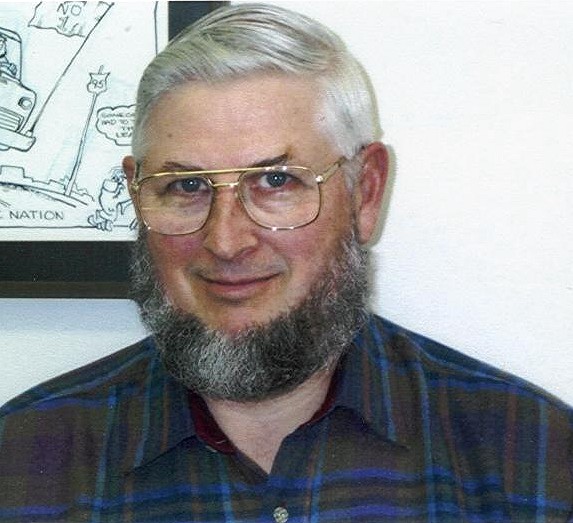
OEHLENSCHLAGER, JOHN GARY - 1940-2009

John Gary Oehlenschlager, born in Wadena, Minnesota on September 28, 1940 to Alice Elizabeth (Marshall) Oehlenschlager and Archibald Hans Oehlenschlager. He was the oldest of four children and grew up on the family farm near Nimrod. John attended country school (55 N.) through the seventh grade. He graduated from Sebeka High School in 1958. He enlisted in the U.S. Navy in August 1958. During his enlisted time in the Navy he attended E.T. School, Submarine training, Nuclear Power School, Qualified as a nuclear reactor plant operator, spent four years at Purdue University as a N.E.S.E.P. student. John graduated from Purdue with a BSEE and Postgraduate minor in Nuclear Engineering. After Purdue John attended O.C.S. in Newport, R.I. and was commissioned as an Ensign. He was EMO on U.S.S. MacDonough DLG-8, E.M.O. on Staff of DESRON 6 in Charleston, S.C., CIC Officer on U.S.S. Sellers DDG-11, a Surface Ship Supt. at Charleston Naval Shipyard. John attended the Naval Postgraduate School, Monterey, CA for his MSEE. John worked as an E.M.O. at NAVELEX, was OIC for JUSMAT Det., Golcuk, Turkey for 18 months, then returned to NAVELEX. He was honorably retired from the US Navy after 20 years 7 months. John then worked for Sperry Univac (under their many names) in Arlington, VA and Eagan, MN for 20 years as a Staff Engineer, Applications Analyst, Senior Staff Engineer, and Systems Engineer, retired from Lockheed Martin (Current name) in 1999, and moved back to land near Nimrod.
John married Judith Kay McKinney in 1962 in Delphi, IN. They adopted two children, Mary Alice Stiles (Jim) of rural Nimrod and John Jr. of Farmington, MN. John is survived by his wife (Kay), mother (Alice Oehlenschlager), 2 children, 5 grandchildren, 1 great-grandchild, two brothers, Steve (Dionne) Alexandria, MN and Richard (Margaret Mary) Mounds View, MN, a niece and nephews and his special son, Klaus Kronschnable. John's father (Archie Oehlenschlager) and sister (Carolyn Oehlenschlager Koskiniemi) preceded him in death.
John began a hobby of working with radios, electricity and electronics as a youngster that led to his career in electronics and his prolific hobby in Amateur Radio. John had many call signs from K0MOC to his final K0JO. John experimented in designing and building his own equipment and he enjoyed being one of the pioneer HAMS who were allowed to operate at 500KC. His home became an antenna farm and he enjoyed every facet of the hobby. John was involved in helping the Hospitals and Public Health communicate in preparation for disaster. He was a qualified weather watcher for Skywarn. John kept bees, and enjoyed working with the resulting beeswax. During the years in Washington, D.C. area John founded the Virginia Van Pool Assoc. with over 200 member vanpools. He received a National Energy Efficiency Award for his work with Van Pooling.
John was a member of the Sebeka United Methodist Church, Nimrod Board Member of the West Central Telephone Co-op, President of the Nimrod Lions, President of the Wadena Ham Club, member of the Old Crows Organization, a life member of the ARRL. President of the Nimrod Hall Assoc., Co-Secretary and hard worker for the Sebeka Area Food Shelf, he served on various Committees to help Wadena County grow.

December 2008 Status
Report
The WD2XSH quarterly report has been
released. We now have over 31,000 interference-free on-the-air operating
hours.
Click
HERE for a PDF copy of the
report.
- - - - -
Want to know how many hours we have accumulated on the air and how many QSO's have been made? Read about it all here in the November 08 Log Summary Report by Rudy Severns,N6LF.
- - - - -
I have an article about my new 500 Watt output 4-400A linear amplifier for the ARRL 600 Meter Experimental Project. It is posted on my other web site, W5JGV.COM. The direct link to the article is HERE. Please use the BACK button on your web browser to return to the 500KC.COM web site.
- - - - -
KC3OL, Ted Holdahl,has set up the Kansas Grabber.
This is in addition the other ARGO Grabbers that are available on the Grabber Page
August 2008 Status Report
The WD2XSH quarterly report has been released. We now have over 27,445 interference-free on-the-air operating hours.
Click HERE for a PDF copy of the report.
- - - - -
Webmaster's note - the News Archive page has been edited to correct some broken links.- - - - -
The ARRL has filed for a modification of the Experimental License for WD2XSH.
You may download a copy of the application as filed with the FCC by clicking HERE.
- - - - -
Click HERE for a copy of the WD2XSH Log Summary through August 2008 by N6LF
- - - - -
Here's a report from SM6BGP, Gunnar Ivarsson about 600 Meter operations in Sweden...
Hello Ralph!
I am writing this email to you because our little ham radio club in Sweden got a licence to transmit on the 600 meter band. The licence is very new, some weeks ago we got it, and for the moment we just have a little life boat transmitter to a very simple vertical antenna. We have some contact with SM6BHZ-Bernt, and he is very helpful with technical tips, about antennas and also a new tx. We got our licence to work on 500 kHz only, power is 10 W erp and for beacon use. You can have a look at .radiorud.se for more info. Call sign for our club is SK6RUD
Best 73's de SM6BGP/Gunnar
- - - - -
Here's a very interesting spreadsheet that sent to us by G3XIZ, Chris Osborn. It lists the UK 600 Meter operators and additional station information. Additionally, Chris notes that the UK 600 Meter power limitation has been increased from 100 mW ERP to 1 Watt.
Click HERE to download the spreadsheet in XLS format.
- - - - -
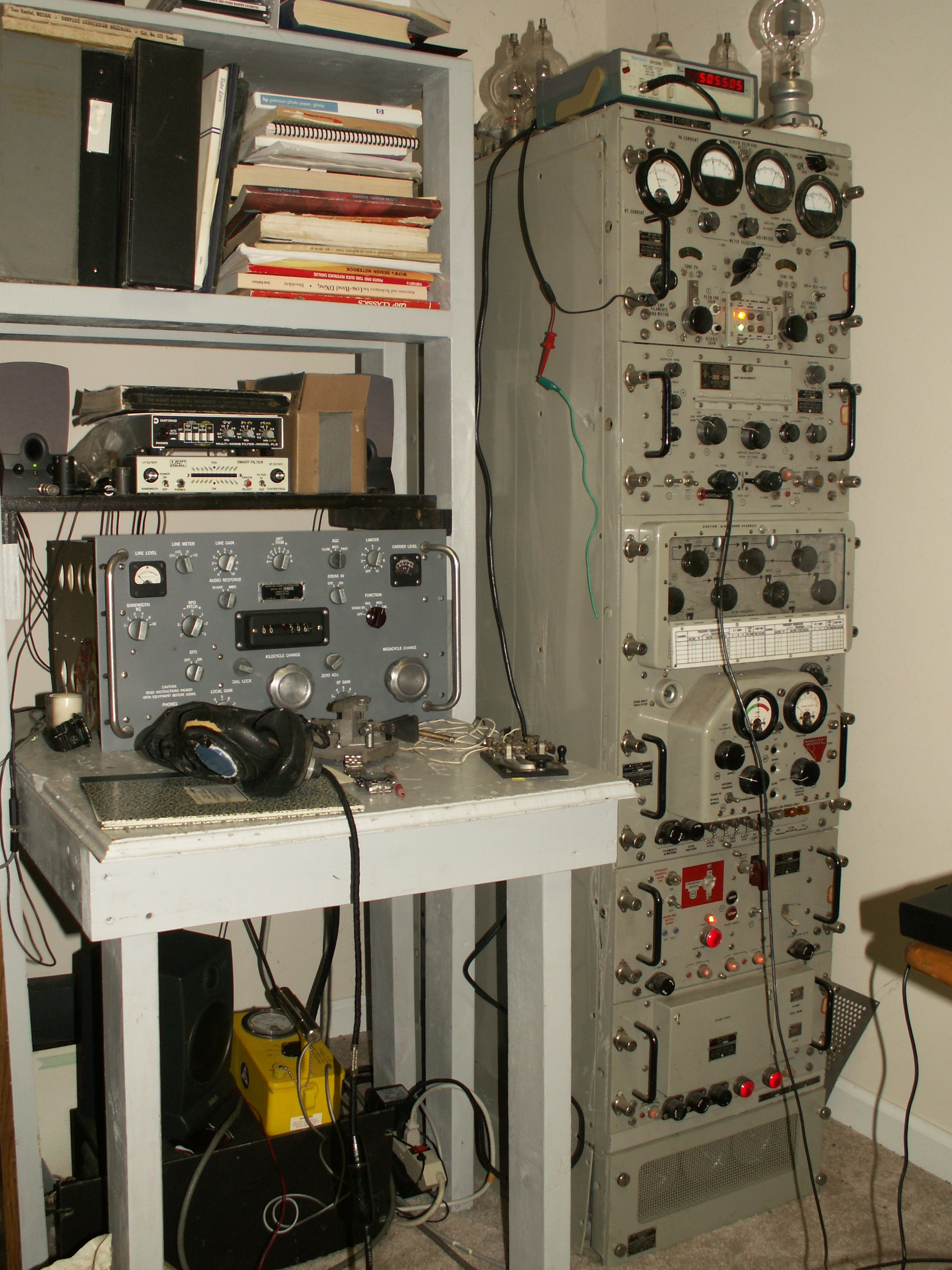
And finally, here's a nice photo of the 600 Meter station at WD2XSH/11 operated by Conard Murray, WS4S. TNX OM!
June 2008 Status Report
The WD2XSH quarterly report has been released. We have now run-up over 20,000 interference-free hours. The report contains maps showing reception and QSOs for all operational stations.
Click HERE for a PDF copy of the report.
Need something to improve your 500 KHz reception?
Try this simple to build Loop Antenna with Preamplifier, contributed by WA1ZMS
- - - - -
New 500-kHz DISTANCE RECORD SET BY /6 !
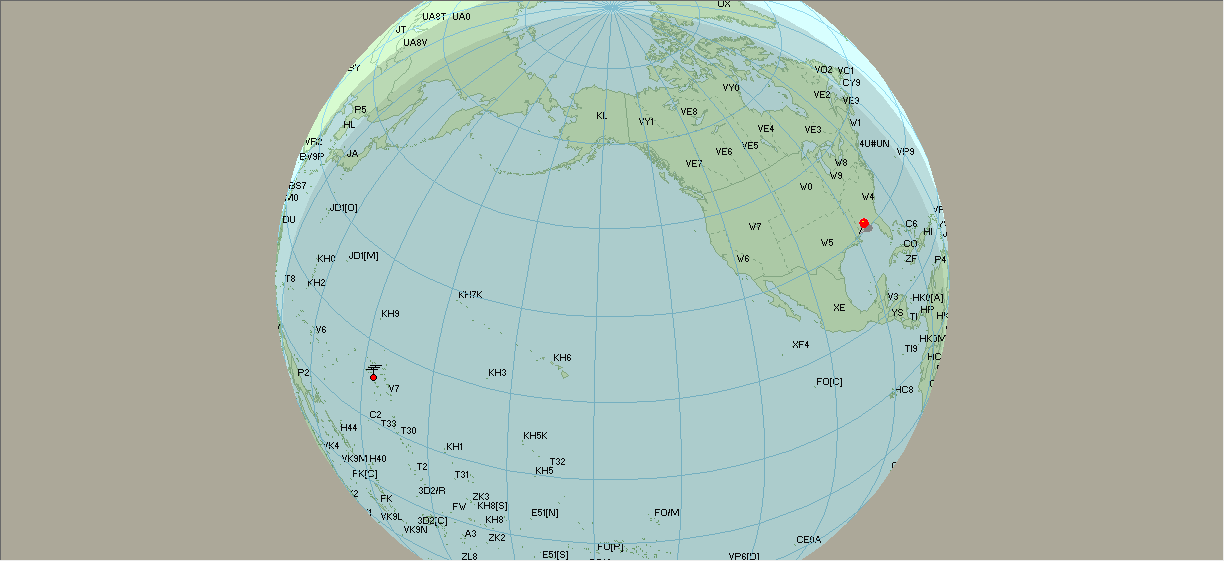
On Feb. 21, experimental station WD2XSH/6 was received on Roi-Namur in the Marshall Islands (6,679 mi) by Neil Schwanitz, V73NS/WB8CRT. WD2XSH/6 is located in Long Beach, MS, and operated by Pat Hamel, W5THT. An article on Pat's station is featured in the March issue of "QST".
- - - -
500-kHz DISTANCE RECORD !
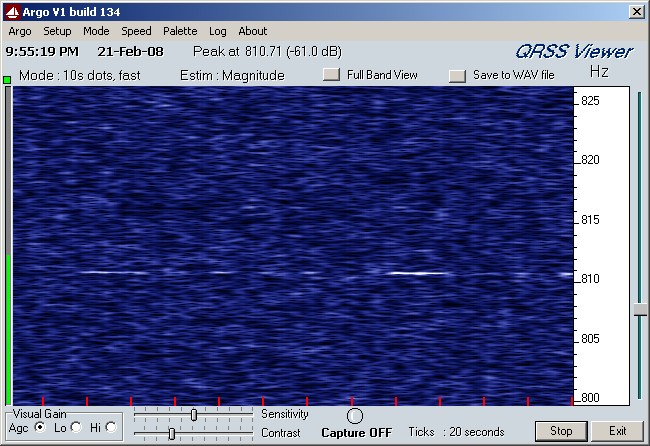
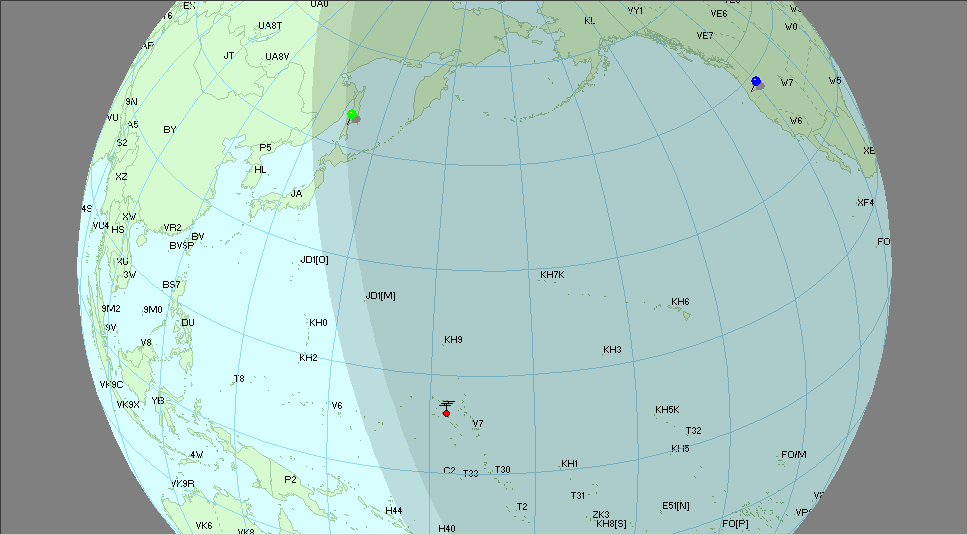
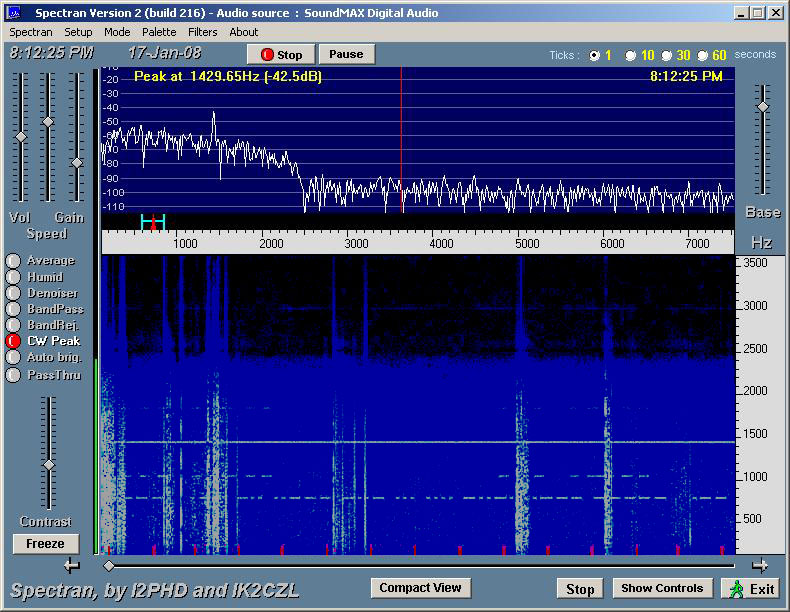
On Jan. 17, experimental station WD2XSH/20 was received on Roi-Namur in the Marshall Islands (4737 mi) by Neil Schwanitz, V73NS/WB8CRT. WD2XSH/20 is located in Cottage Grove, OR and operated by Rudy Severns N6LF. The transmission in CW at about 13 wpm was copyable by ear and appears in the Spectran capture as well. "SL" in the capture is an NDB on 505 kHz located in Khomotovo, Russia.
- - - - -
SSB operation on 600 Meters? You bet!!
Here's a recording made by Dick, WA3USG on January 27, 2008.
Dick reports: "Here's a snipet of the SSB activity on 510 KHz Sunday evening. I copied WE2XGR/1, /2, and /3. This is using my SDR/IQ and my AMRAD E-Field probe. Boy, down here the audio almost sounds like good A.M. modulation!"
ssb510_jan27.wav
- - - - -
Rik Strobbe ON7YD is now on the air from Belgium. Here's his report:
" I want to inform you that since 29 January I am QRV on 600 meter. Temporarily only on 503.1 kHz with about 0.5 Watt ERP but in the near future I intend to increase my ERP to about 3 Watt and will be able to transmit the in entire 501-504 kHz range. The call used is OR7T.
" According to the recent decision of BIPT (Belgian FCC) any holder of a full licence can operate 501-504 kHz with maximum 5 Watt ERP on a secundary (non interference) base. Mode is limited to CW (including QRSS). In the past days I have been able to work about a dozen UK stations (G, GW, GI, GM), best DX is GM4SLV at about 1100km. In the same period I received reports from PA, F, DL, G, SP, OK, SM and OH (best DX 1680 km). "
- - - - -
UK Hams on 500 KHz are now allowed 1 Watt ERP.
See http://www.ofcom.org.uk/radiocomms/ifi/licensing/classes/amateur/Notices/20080201
For your enjoyment, here are some ARGO captures made at W5JGV on New Years Eve. It looks like some transmitter adjustments were going on. Click on any of the thumbnails for a larger picture. When viewing a large picture, clicking on the upper right hand button will start a slide show. For show speed and other adjustments, simply click on the "help" link at the bottom of the page.
- - - - -
Finbar, EI0CF/GI4DPE (Ireland) sent recordings of two of the WE2XGR experimental stations.
These were recorded on 12 December 2007.
Clip #1 - WE2XGR/6 - Clip #2 - WE3XGR/6 and ?
- - - - -
ARRL Experiment featured in November 2007 issue of the Swedish Amateur Radio magazine "QTC"
Click HERE for a PDF file of the article.
- - - - -
Part 5 Experimental Station WE2XGR joins in experimental project on the 600 Meter band.
The license for WE2XGR was issued by the FCC on September 5 with the following specifications:
Power 200 Watts ERP, Frequency 505-515 KHz , Modes CW, SSB, and data, Term 5 Years (expires Sept 1 2012)
For information about individual WE2XGR stations, click HERE. For the WE2XGR license, click HERE.
- - - - -
The November 2007 Status Report for the WD2XSH project is available for downloading at THIS LINK.
Thanks to Fritz Raab, W1FR, the Experiment Coordinator for preparing this report.
WE2XGR/2 seen running in Hellschreiber mode on 600 Meters
ARGO capture by WD2XSH/13
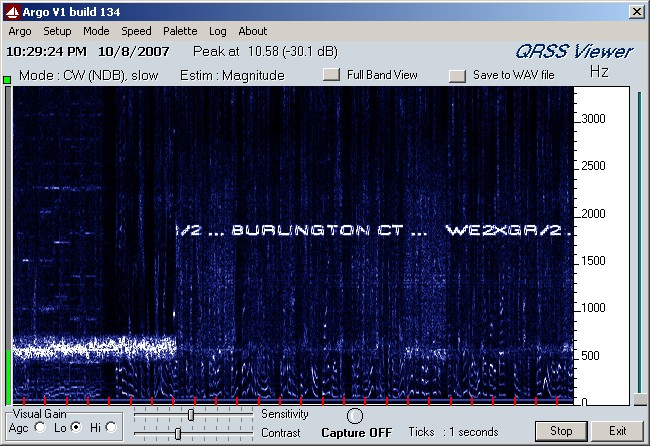
Quoting John, "At 0140 copied a very clear Hellschreiber transmission from XGR Burlington VT. It surprised the hell out of me!!! 506.600 KHz. It was clearly readable in spite of relatively high level of QRN to the East. It popped up on the ARGO screen running in normal mode. John O. /13"
- - - - -
Do trees work as 600 Meter antennas? Yes! See THIS PAGE for details. Be sure to follow the link to the RF preamplifier that I built for the antenna. It has power-over-the-coax, and can be used with many types of antennas. Lots of gain, and low noise. (tnx K06BB)
Data shown on the maps below is excerpted from the Second Report sent to the ARRL and compiled by W1FR.
During the past three months, the WD2XSH stations have added 2250 hours of operation, bringing the total to 4629. Twenty-seven additional QSOs have been made, bringing the total to 75. Over 3100 reception reports have been filed on our web site. A map showing the QSOs appears below, and statistics for each station are given in the appendix of the latest report. Most of the "records" for QSO and reception distances that were set in the first quarter have not been broken. The longest distance over which a QSO has been maintained is 884 mi from New Hampshire to Tennessee. Station /10 (W4DEX) completed a cross-band (500 kHz - 137 kHz) QSO with WD2XNS (W1VD) in Connecticut.
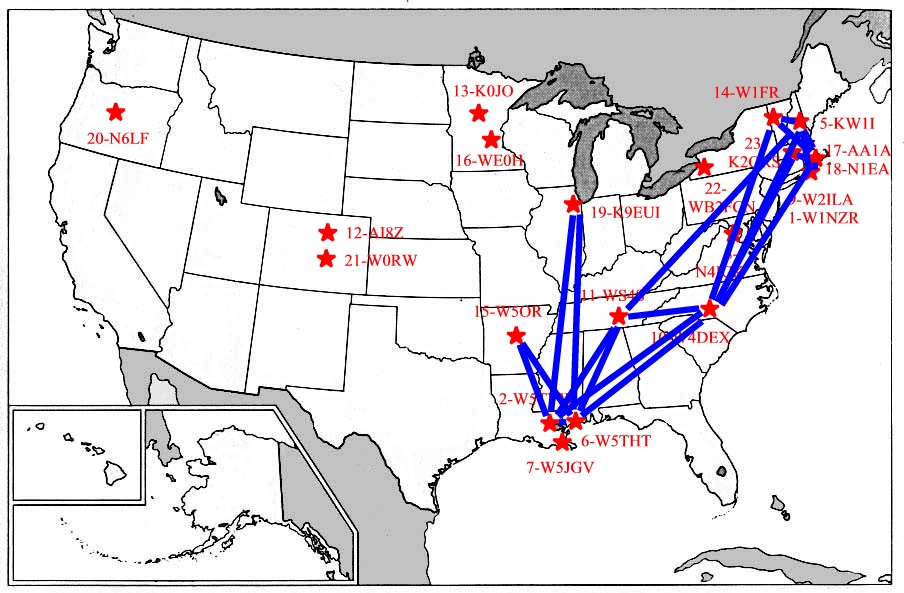
WD2XSH Station QSO Paths as of 28 FEB 2007
Reception Reports for some of the WD2XSH Stations are shown in the maps below.
The station location is indicated by a red star. Blue diamonds indicate reception locations for that station.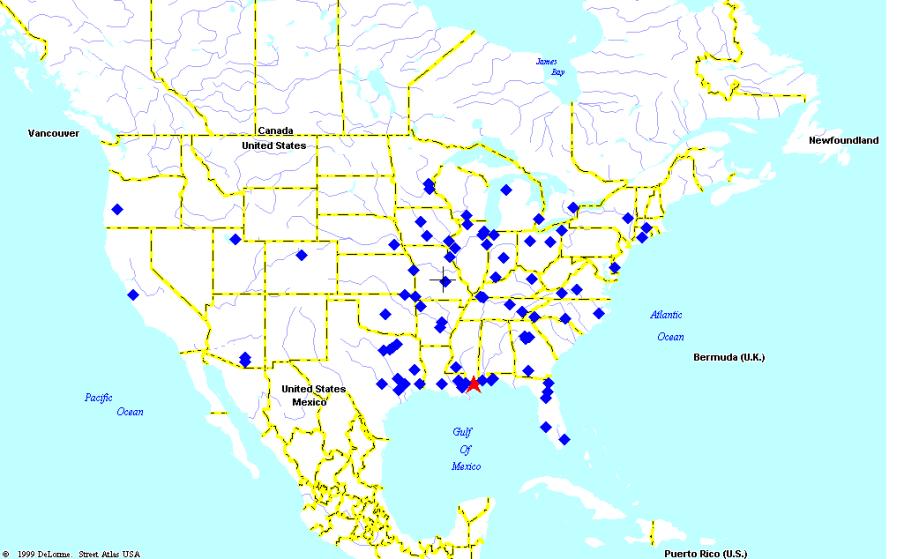
Reception Reports for Station WD2XSH / 6

Reception Reports for Station WD2XSH / 10
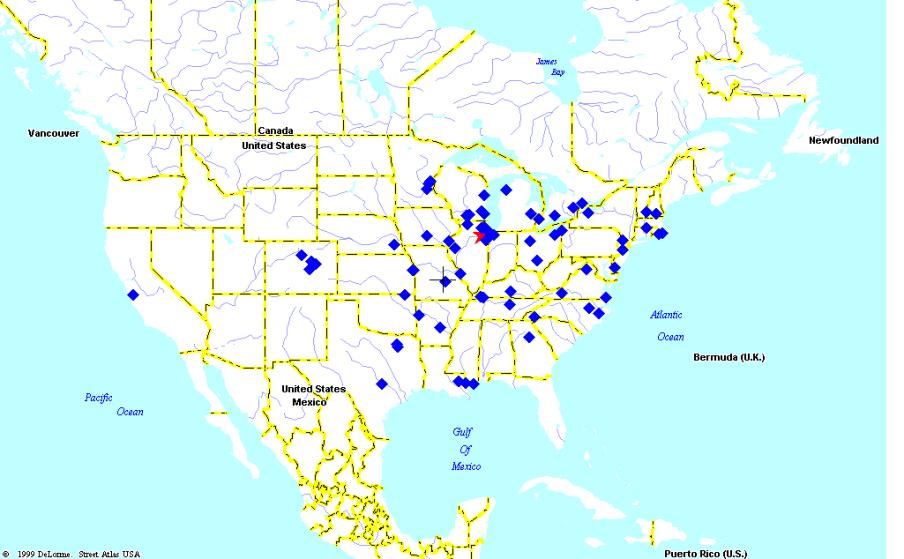
Reception Reports for Station WD2XSH / 19
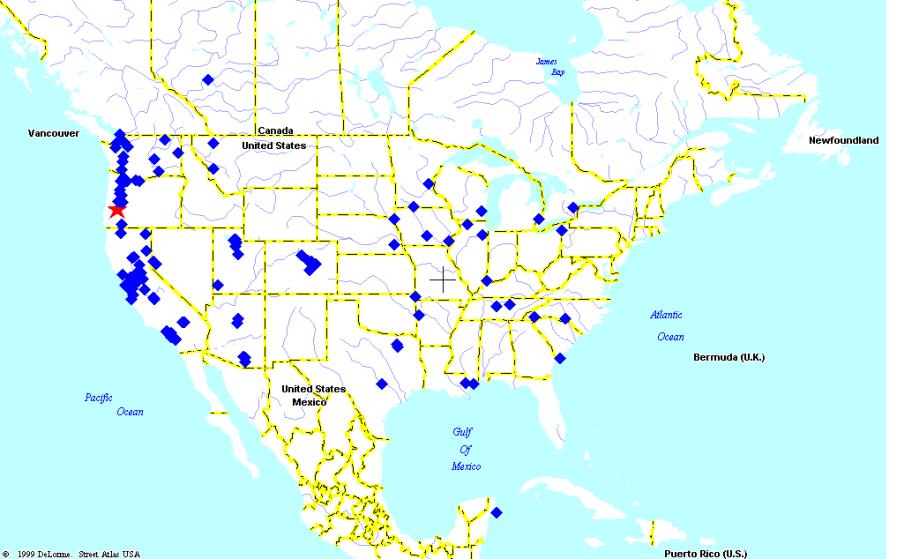
Reception Reports for Station WD2XSH / 20
K2ORS files application for Part 5 License for 505 - 515 KC
From the ARRL Web Site:
NEWINGTON, CT, Sep 15, 2006 -- (As of September 13, 2006) The FCC's Office of Engineering and Technology has granted a Part 5 experimental license to the ARRL on behalf of a group of radio amateurs interested in investigating spectrum in the vicinity of 500 kHz. Experimental license WD2XSH was issued September 13. The two-year authorization permits experimentation and research between 505 and 510 kHz (600 meters) using narrowband modes at power levels of up to 20 W effective radiated power (ERP). ARRL Member Fritz Raab, W1FR, of Vermont, will serve as experimental project manager for "The 500 KC Experimental Group for Amateur Radio."
Monday, May 1, 2006 - There is a move being made by some in the "Maritime" radio community to have the 600 Meter band and 500 KHz remain (silent except for certain memorial stations) as a permanent memorial to marine radio history. This, of course, would effectively eliminate any possibility of obtaining an Amateur allocation in the 600 Meter band.
Fritz Raab, W1FR, has written a concise report on this potentially divisive situation. This topic is so important that I have printed his entire report here. You may download his report as a PDF file by clicking HERE.
- - - - - - - - - - - -
GMRR M06-1A COOPERATION ON THE FUTURE OF THE 600-METER BAND
Prepared by Fritz Raab, W1FR, 8 March 2006
Two groups are interested in preserving the 600-meter band (495 - 510 kHz) that was formerly used for maritime telegraphic communication. The "Amateur" community would like to see the 600-meter band become an amateur band. The "Maritime" community would like the band to remain silent except for use by the historical maritime CW stations (HMS). Of course, it isn't quite this simple and a number of us have interests in both areas. The start of the new year seems to be a good time to suggest we all think about cooperating and working together to preserve this historic piece of spectrum.
First here are some basic facts:
(1) The 600-meter band *was* for a century an extremely important maritime-communication band. However, the SOLAS treaty and subsequent creation of the GMDSS ensured the demise of maritime communication on 500 kHz. 600 meters has since become virtually abandoned for real maritime communication and is now used only for occasional special-event transmissions by organizations such as the Maritime Radio Historical Society (MRHS).
(2) There is *no* chance that real maritime communication at 500 kHz will be revived. The equipment costs 100 to 1000 times as much as UHF equipment, and trained operators would be needed.
(3) The spectrum at 500-kHz is very valuable and has many potential uses, including DGPS, traffic-information service, broadcasting, homeland security, and NAVTEX. None of these potential users will tolerate sharing the band with historical maritime stations.
(4) Occasional use by historical stations is not going to hold the band against commercial pressures and other national interests.
(5) No regulatory agency - national or international - is going to allocate useful frequencies for "silence." Our FCC would no doubt like to find a way to auction it off! I expect that in one or two more WRC cycles, we will see a reallocation.
(6) In the USA, 435 -495 kHz has been claimed by the USCG for their new HA DGPS. The bands from 190 to 285 kHz and 325 to 435 kHz are being used by aeronautical NDBs. The band from 285 to 325 is filled with marine DGPS beacons. Thus the only MF range that can potentially be reallocated to amateurs are 495 - 505 kHz internationally plus 505 - 510 kHz in Region II. Now I think all of us -both maritime and amateur groups - can agree that we do not want to see DGPS, broadcasting, TIS, or NAVTEX in the 600-meter band. Most all of us would like to see CW and historical maritime communication able to continue in this band. With this in mind, it makes sense for the amateur and marine factions to become partners in preserving the band against other interests.
Amateurs will get at most a secondary allocation at 600 meters. That means when special- event maritime transmissions are underway, amateurs will have to stay out of the way. As a practical matter, most of us will be trying to listen for the special-event transmissions instead of operating.
Once there is an amateur allocation at 600 meters, the ARRL, RSGB, WIA, and other national amateur organizations will police the band against interlopers and protect it against other would-be users. This will be to the advantage of both the maritime and amateur groups. The combined resources of the amateur organizations (ARRL, RSGB, WIA, RAC, etc.) far exceeds that of the maritime community (e.g., MRHS). Thus making an ally of the amateurs should give the maritime community clout that it would otherwise not have.
The presence of amateurs in this band will ensure that CW will be heard into the forseeable future. No other service will use CW. I doubt there will be a lot of commercial ham rigs capable of operating in this band, so I do not see it becoming crowded like some of the HF bands.
There will, of course, need be some sort of a band plan for amateur use. Exactly what will depend upon how much spectrum we could get. As a minimum, a band plan will need to provide for the possibility of marine operation at 500 kHz and to separate amateur beacons, CW, and digital transmissions. It may make sense to leave 499 - 501 for the historical maritime stations, or perhaps it could be also be used for amateur calling, emergency comms, and bulletins, much as its original use.
Amateur use of a small band like 600 meters will have to be limited to CW, PSK-31, and other narrowband modulations, which can easily be kept out of the way of maritime communications. However, it may be possible to arrange for some other types of transmissions on a special-event basis. For example, during annual "maritime or Fessenden days," MCW and AM could be allowed.
The most important reasons for amateurs to be able to use 600 meters is to provide reliable regional communications in an emergency. To this end, it should be able to arrange permission for "cross-service" communication with the historical maritime stations, resulting in a larger and more effective emergency-comms capability. This capability will be a much more important reason to retain a frequency allocation at 500 kHz than are either the occasional historical operations or ordinary amateur operations.
Future operations of maritime-historical-radio organizations such as MRHS requires a continuing source of new members, as there will be no more maritime radio officers trained in the use CW. Shared use of the 600-meter band with amateurs will be an effective way of interesting amateurs in maritime-radio history. These amateurs will help expand the historical organizations in the near future and ensure their continuance in the more distant future.
The maritime community may agree that amateurs would be better than the other would-be users, but prefer to wait until there is a real threat from one of the other would-be users. This is a risky approach. If we wait until some commercial or government entity develops an interest in this frequency band, it is going to be difficult or impossible to stop them.
We can work together to preserve this historic frequency band - or we can squabble among ourselves and loose it to another service that neither of us likes. My hope in writing this is that everyone involved can see the need for cooperation and the mutual benefit in sharing the band. When it comes time for the ARRL to file a petition for amateur access, my hope is that MRHS and others in the maritime faction will file supporting briefs so that together we can preserve this historic piece of the spectrum.
de W1FR
Tuesday, 28 June 2005 - I've been receiving quite a few emails wanting to know when the group member stations will begin transmissions. The simple answer is - not until we receive the license from the FCC. When will that be? Your guess is as good as mine. There are a lot of details that the FCC must consider carefully before making a decision of whether or not to grant the license. In the meantime, the group members will be making plans to get on the air at the earliest opportunity, whether it be with homebrew rigs or modified gear.
Please, let me point out once again that the fact the FCC has assigned the call letters WD2XSH to this application NOT mean that the actual license has been granted. It simply means that it is "in the pipeline," so to speak, for processing in the usual manner.
Other email messages have inquired as to what modes, frequencies and power levels we will be using. This information is all in the application, but it typical FCC-speak, so some of it is difficult to figure out. So, courtesy of Frederic Raab, W1FR, here's the scoop on what's what:
Frequency of Operation - 495 to 510 KHzMaximum Power Output to Antenna - 100 Watts
Maximum EIRP - 20 Watts
Emission Modes - CW and PSK31
Number of Stations - 23
[Editor's note - 24 June 2005] The processing of a Part 5 application can require many months after filing the paperwork with the Federal Communications Commission (FCC). This lengthy process is required because the safe use of the radio frequency spectrum that is already licensed to government, military and various commercial and private interests must be carefully protected. It is almost certain that there will be some revisions and clarifications of the application paperwork before the license is granted. Because of these changes and revisions, the final grant of license will often contain substantial differences from the original application.
To clarify - the assignment of the call letters WD2XSH to this Part 5 application DOES NOT mean that the actual license is about to be granted. It may be as long as a year - or even longer - before the status of the application is finally decided, and the license to operate is either granted or denied. - W5JGV -
Wednesday, 22 June 2005 - Washington, D.C. - The Federal Communications Commission has issued the call letters WD2XSH for the 600 Meter Part 5 Experimental operations to be conducted by the ARRL 600 Meter Experimental Group. The actual grant of license will be done in the normal course of operations by the FCC.
In the meantime, it is reported that members of the Experimental Group are melting solder, tuning transmitters, stringing feedlines, and polishing their keys in eager anticipation of the issuance of the license itself, which will allow then to commence operations on 600 Meters.
All operations will necessarily adhere to the Part 5 rules and to the proposed plan of research specified in the license application. Results of the project will be forwarded to the Commission and posted on this web site. When transmissions actually commence, we will post a notice on this web page.
Reception reports of the transmissions made by Group participants are requested. You do not have to be a member of this group to send us a reception report. Please use the link at the left side of this web page to enter your reports.
Friday, 24 June 2005 - (Additional information from Walt Ireland, WB7CSL ARRL Technical Relations Office) - At any time during the processing of the Part 5 license application, any government agency that has reason to believe that the proposed 600 Meter transmissions might cause interference with their use of the radio spectrum may file an objection with the NITA and the FCC. Filing such an objection could delay or even prevent the license from being issued.
NTIA stands for National Information & Telecommunications Administration, and it works like an FCC for Government communication users. For example, the US Coast Guard would go to NTIA if it believed that any of the frequencies requested for the experimental license could cause them interference.
ARRL files request with the FCC for 600 Meter Experimental License
23 US Amateur operators selected for experimental project.
>> The following is from the ARRL web site <<
"NEWINGTON, CT, Apr 22, 2005--The ARRL has applied to the FCC for a Part 5 Experimental license on behalf of a group of radio amateurs interested in operating in the vicinity of 500 kHz. ARRL General Counsel Chris Imlay, W3KD, announced the filing during a meeting of the ARRL Executive Committee April 9 in Denver. The experimental application was among several items the EC dealt with in addition to the previously reported recommendations to the ARRL Board of Directors regarding a planned regulation-by-bandwidth petition.
If granted, the two-year Part 5 license would permit experimentation and research between 495 and 510 kHz--just below the Standard AM Broadcast Band--at power levels of up to 20 W effective radiated power. Modes would be CW and PSK31. ARRL Member Fred Raab, W1FR, of Burlington, Vermont, would manage the project, which calls for 23 discrete fixed sites across the US. The license application requests authorization for experimental stations at Raab's QTH in Vermont as well as at sites in Arkansas, California, Colorado, Illinois, Louisiana, Massachusetts, Minnesota, Mississippi, New Hampshire, New Jersey, New York, North Carolina, Oregon, Rhode Island, Tennessee, Texas and Virginia".
Additional information about Amateur Radio and Part 5 Experimental Operation may be found on my other web site at W5JGV.COM